Year
2018
Project at
ArtCenter College of Design
Role
Haptic feedback Designer

The experiences

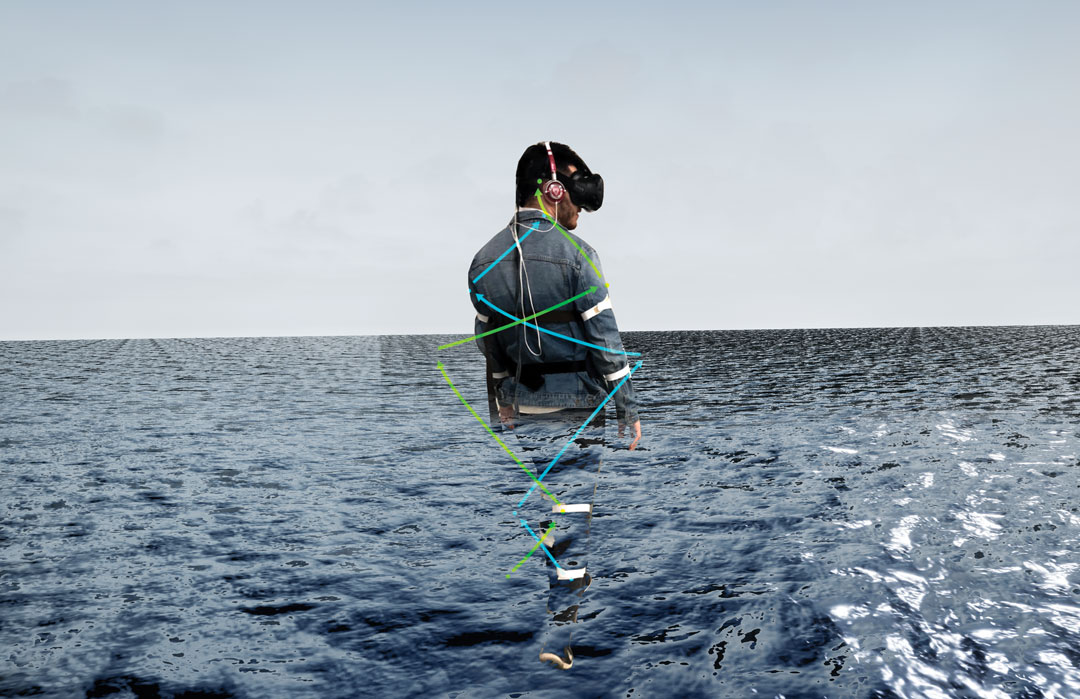
Rising Water
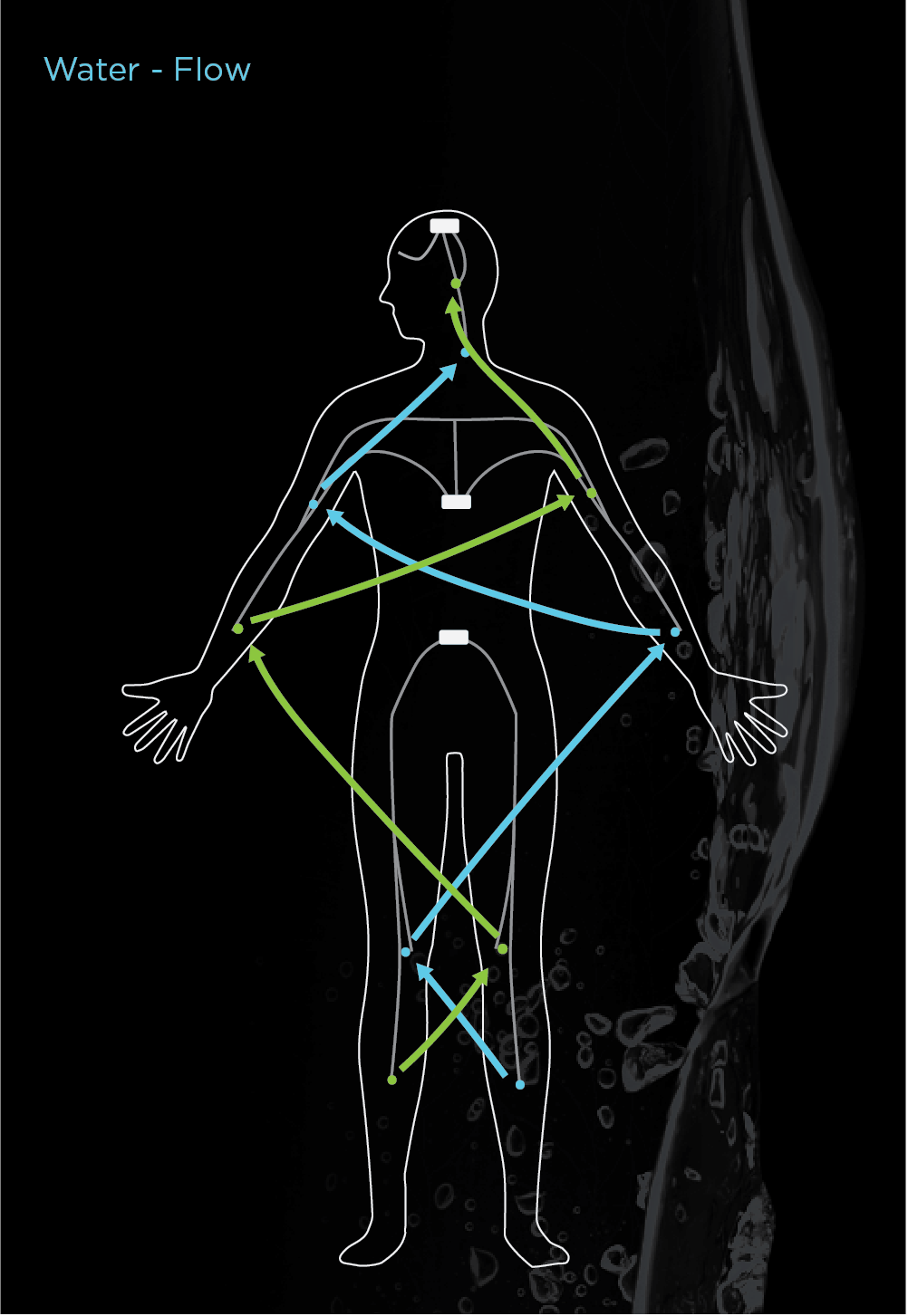
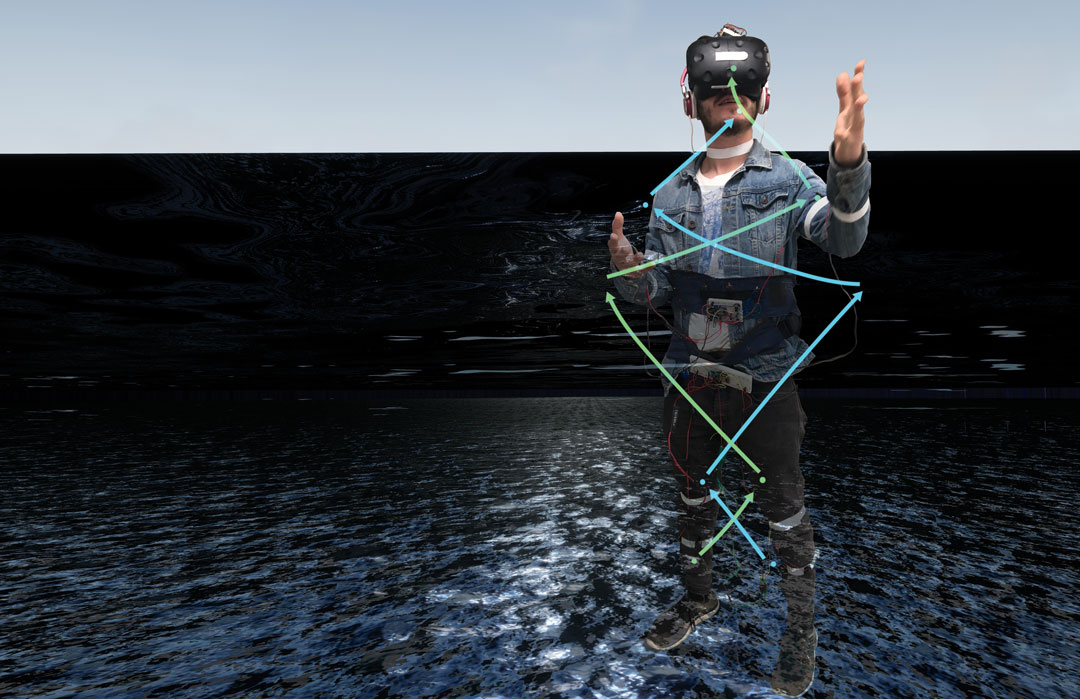
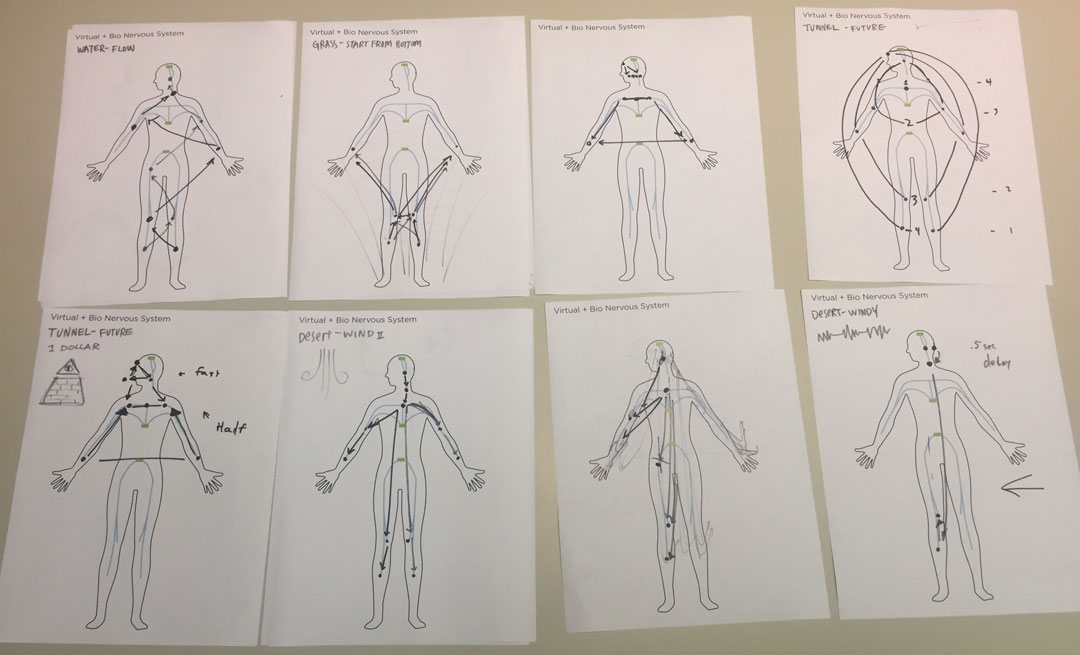
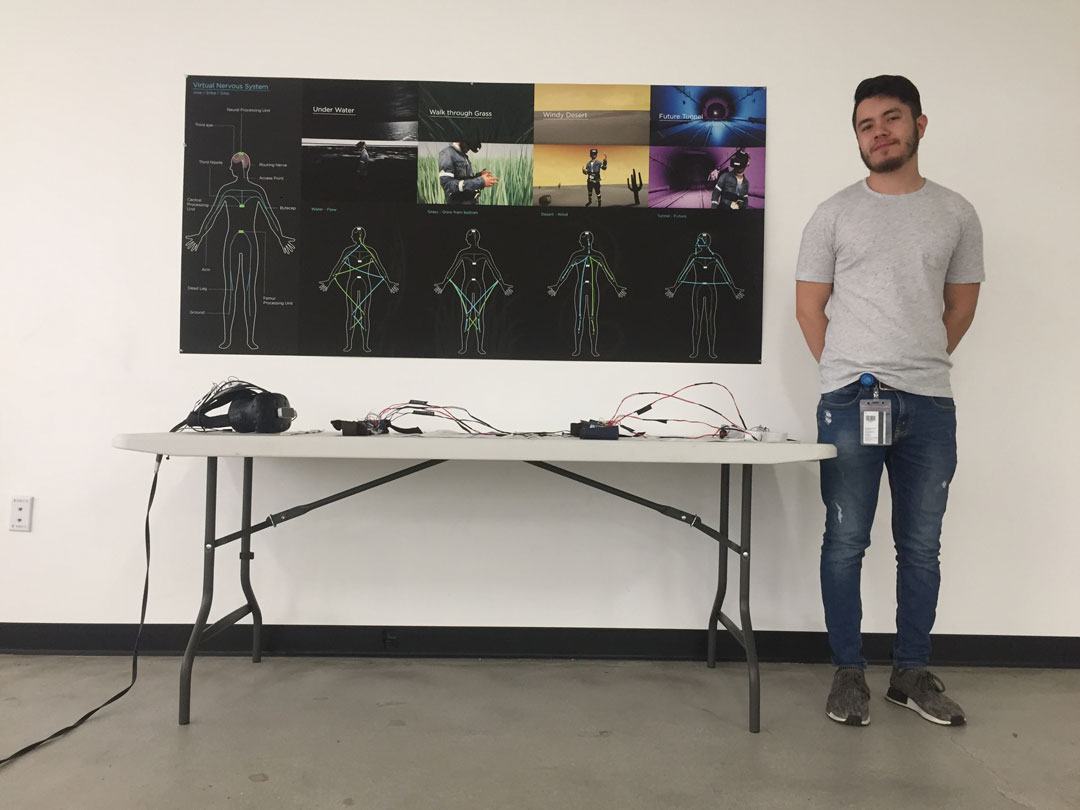
Haptic sensors activate sequentially from side to side up the body, mimicking the lateral rhythm of a wave. The sensation is less about wetness and more about momentum — the body registers the rising tide before the eyes do.
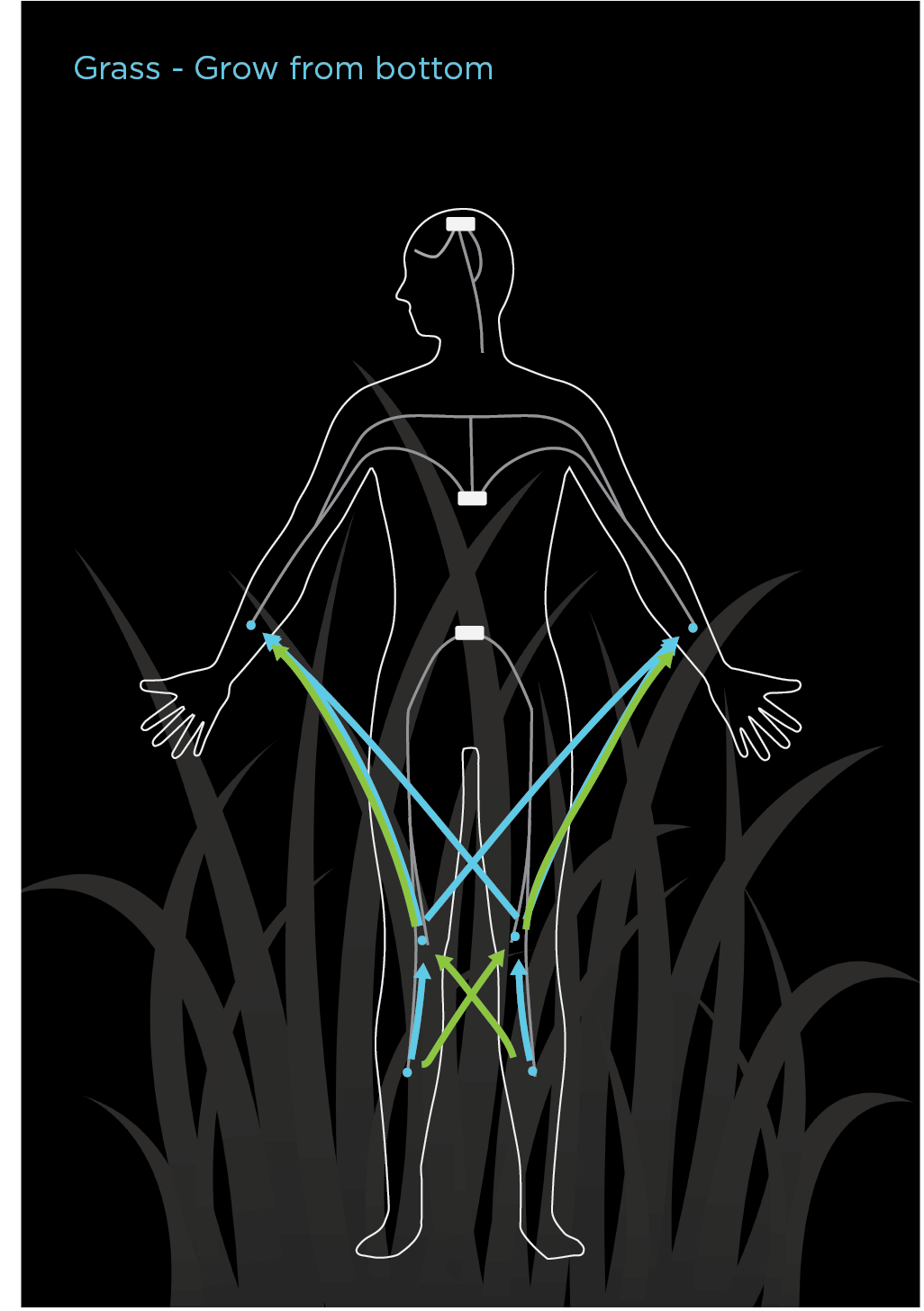
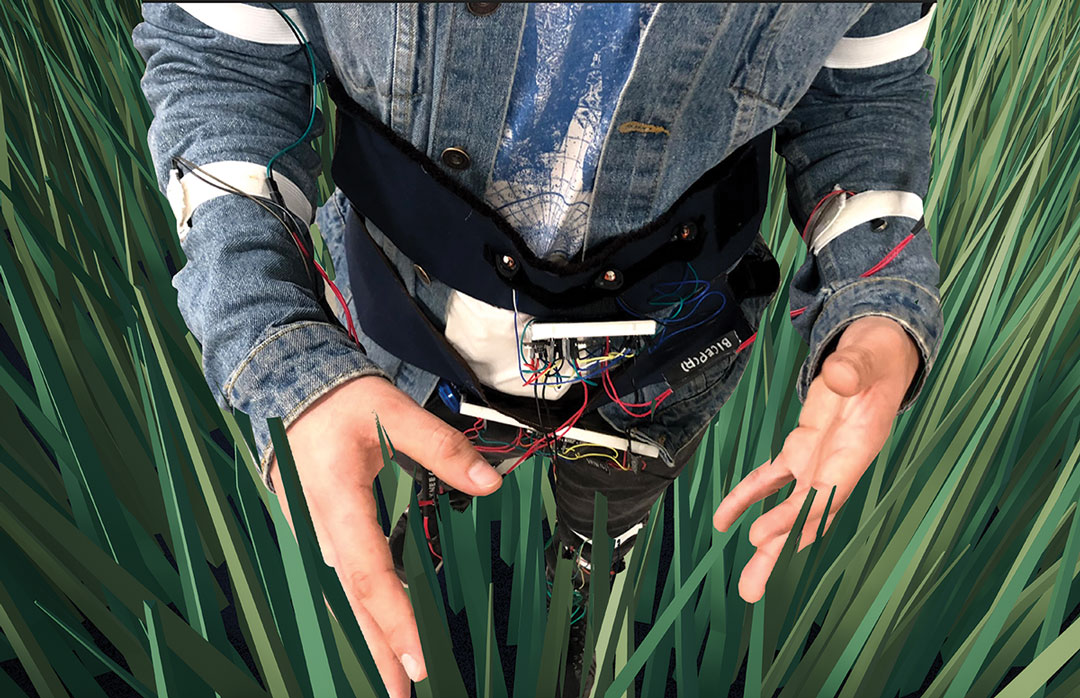
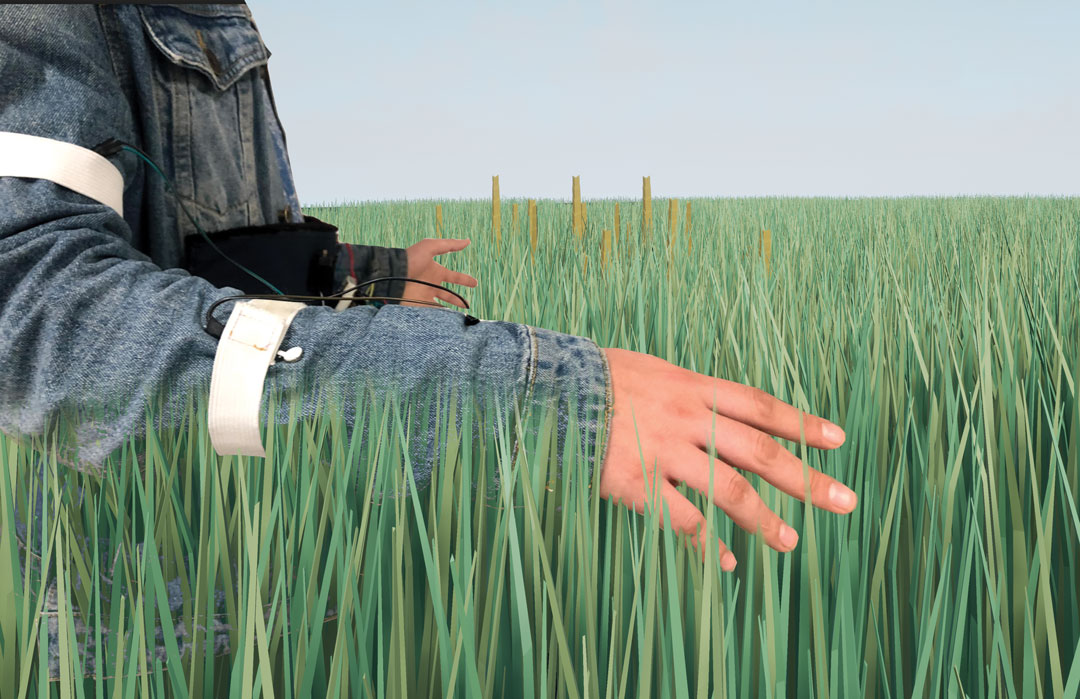
Walking Through Grass
Sensors fire from the feet upward, tracing the path of grass brushing against the leg and continuing to the opposite forearm. The cross-body mapping creates an unexpected but immediately legible sensation — your nervous system fills in the rest.
Windy Desert
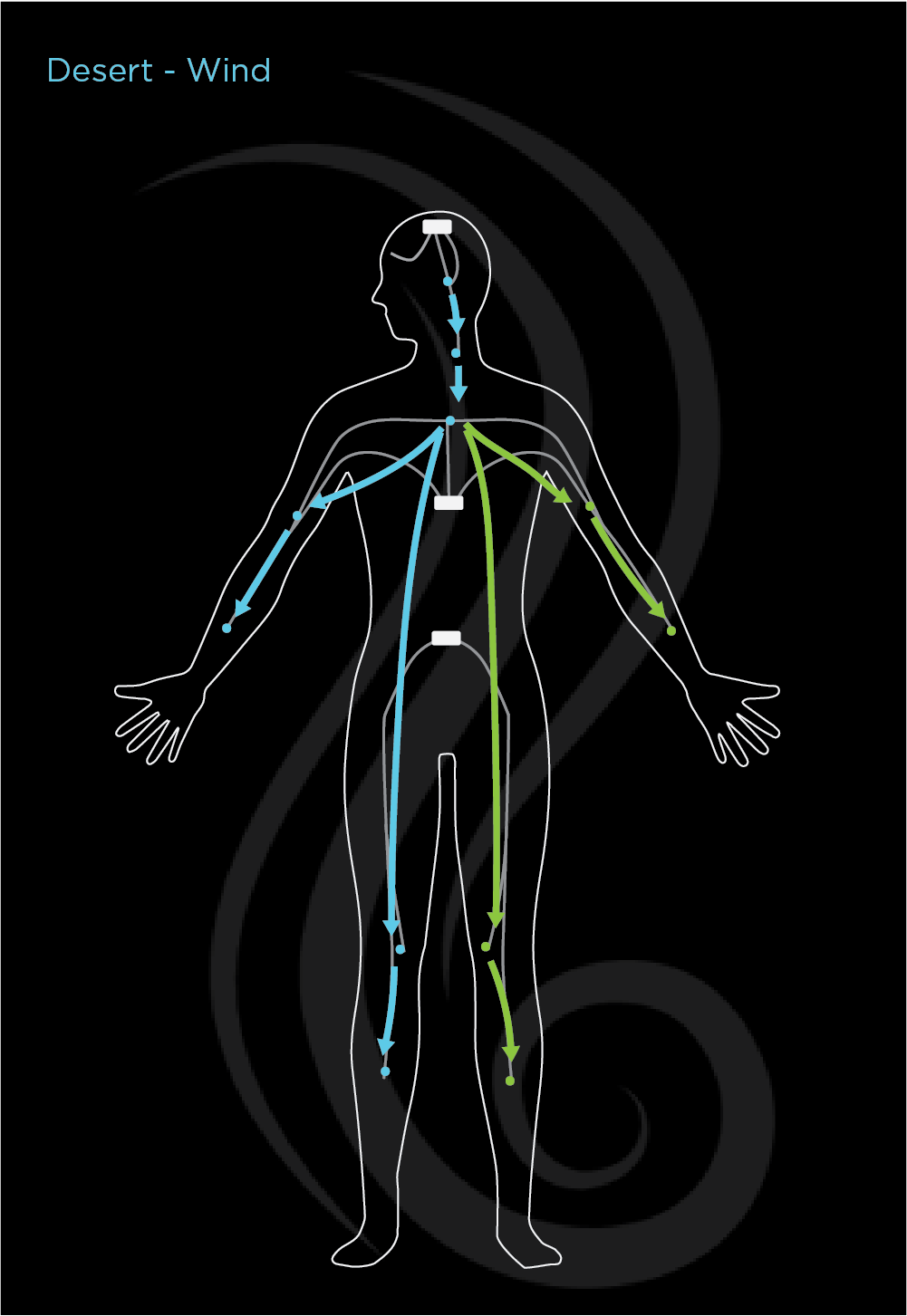
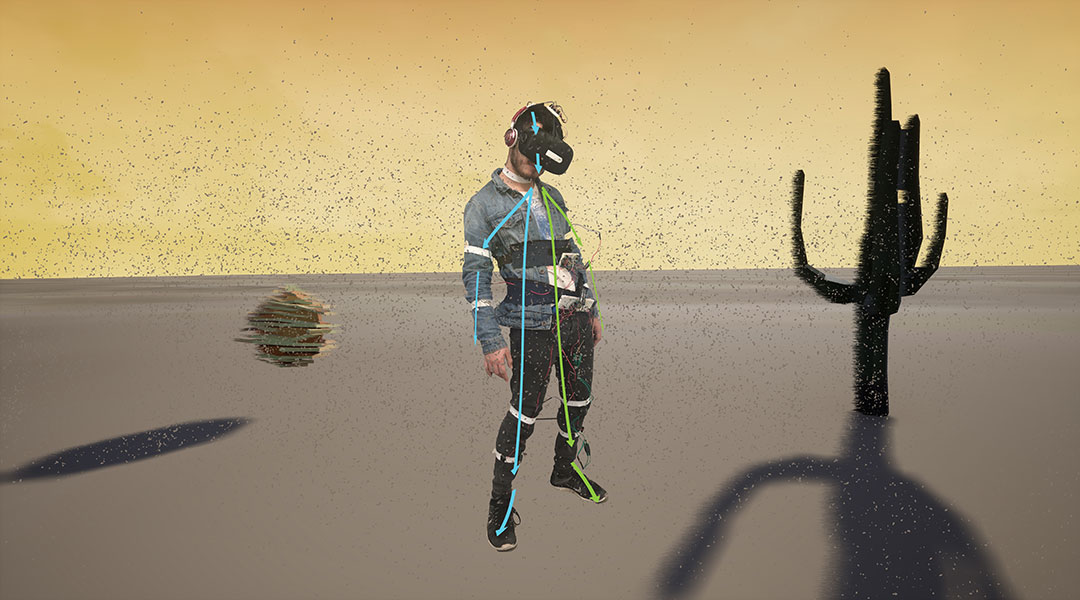
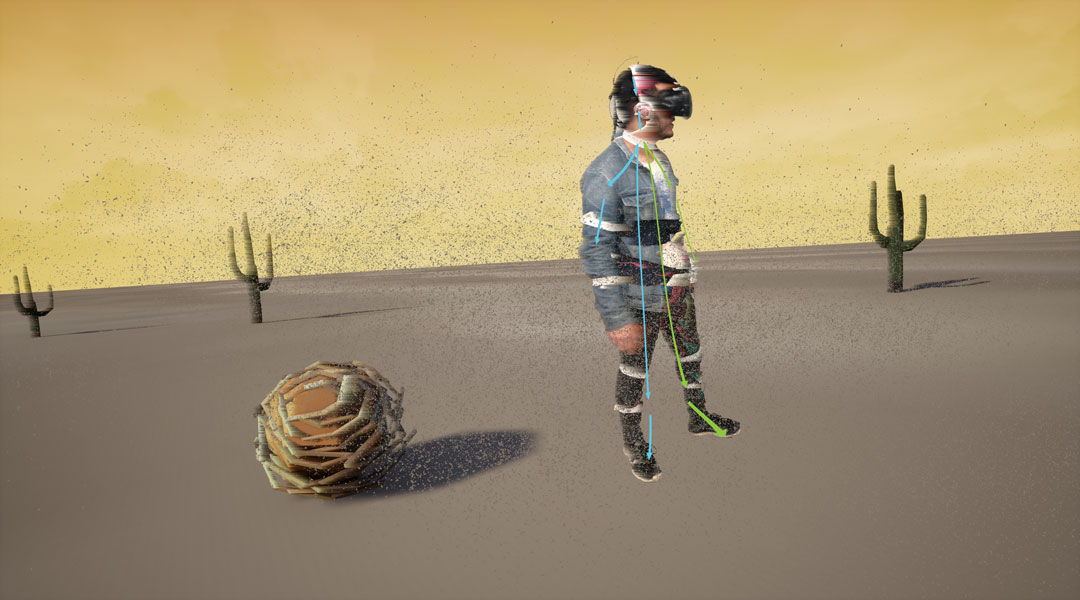
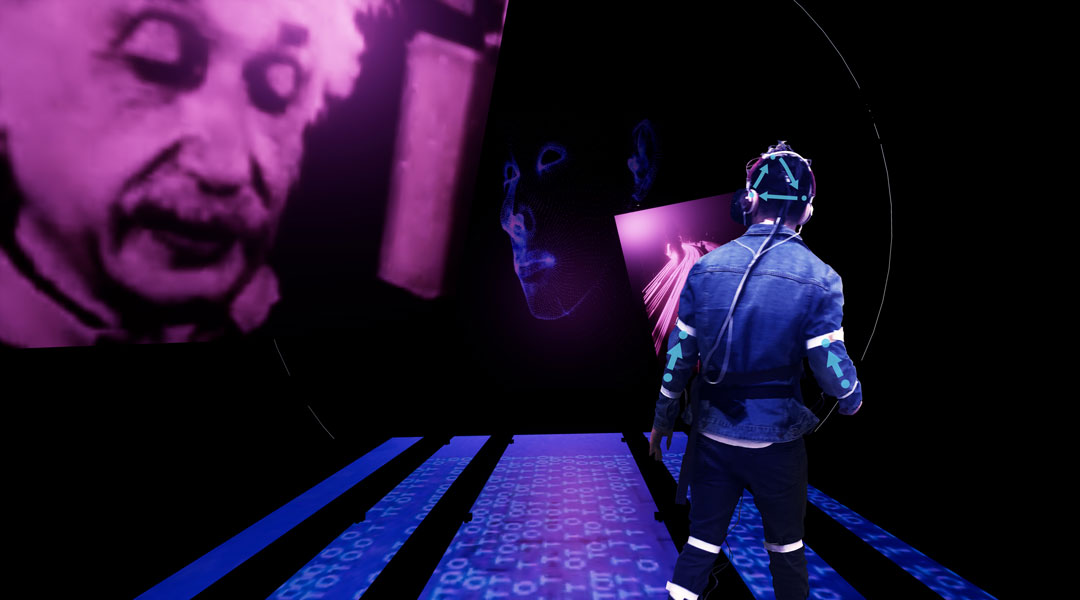
Wind begins at the head and cascades downward through the entire body. The top-down directionality contrasts with the other experiences and creates a distinctly different emotional register — exposure, openness, scale.
Out of body experience
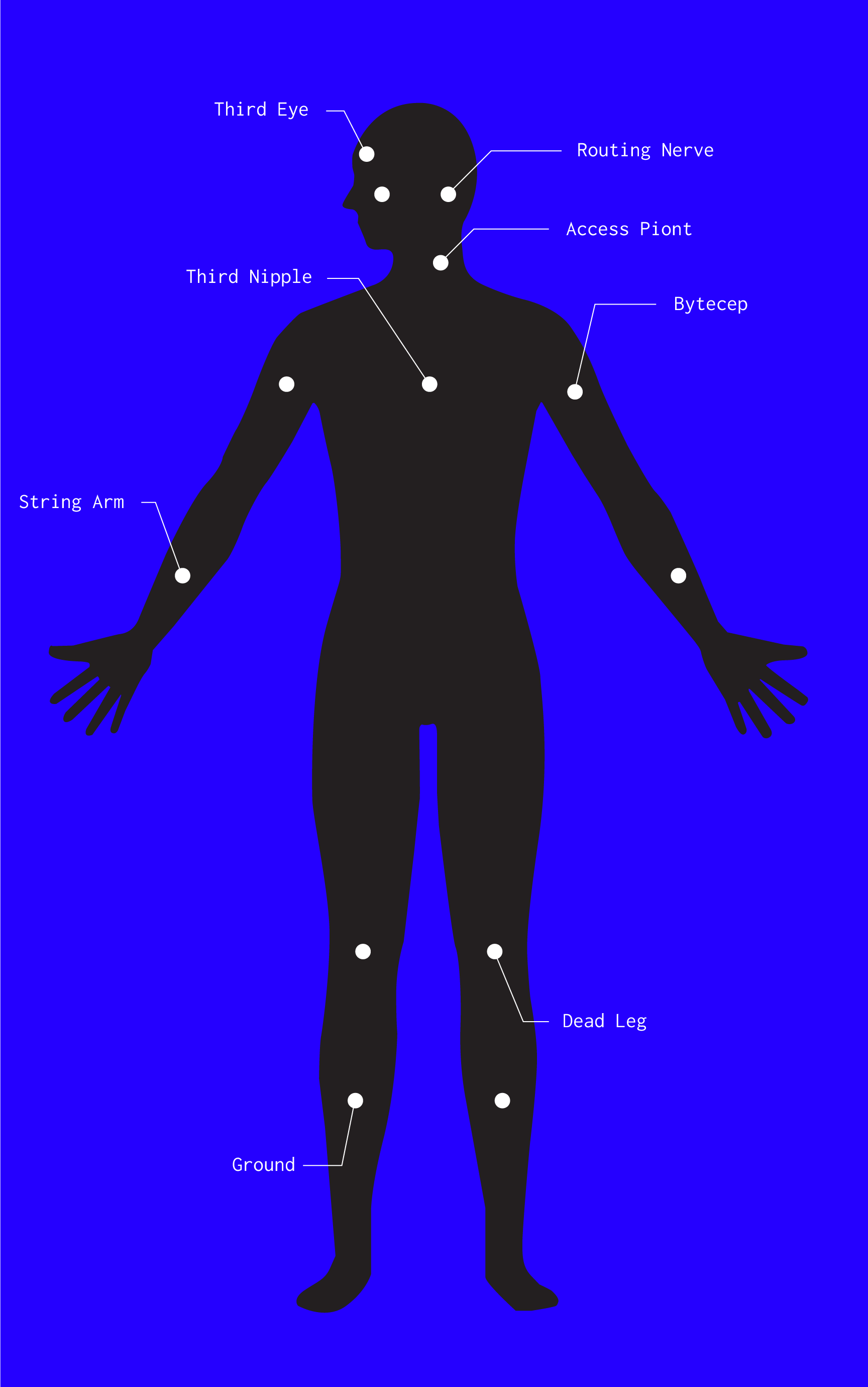
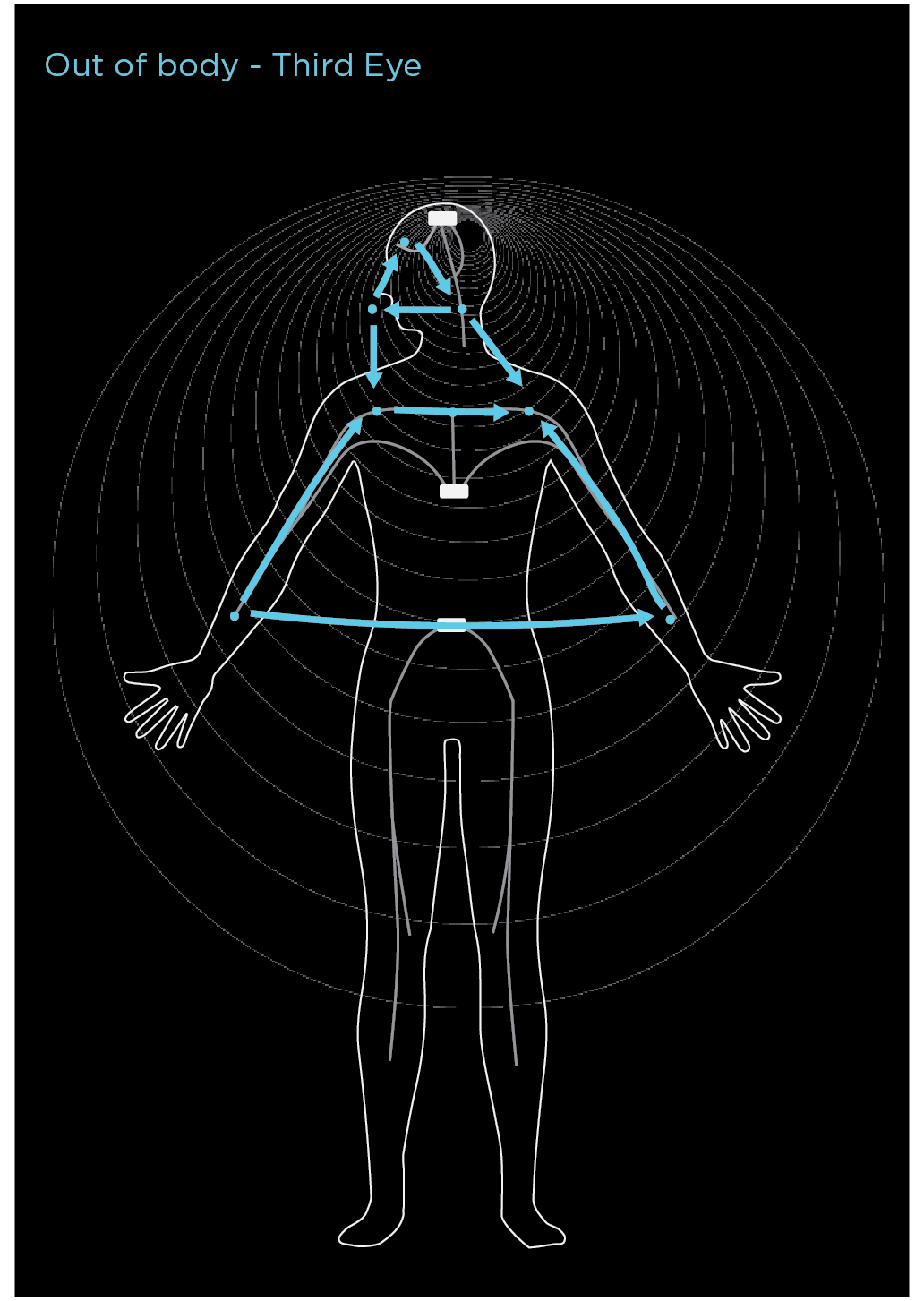
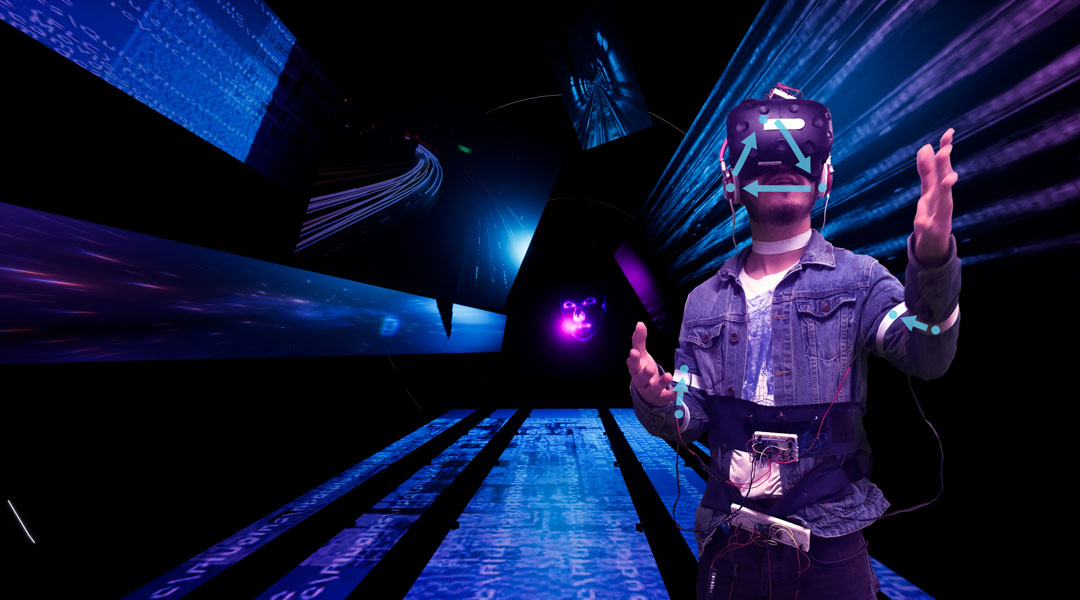
The most abstract scene in the series. Rather than simulating a natural phenomenon, this experience lets the technology define the sensation. Drawing on the concept of enlightenment through a third eye, haptics at the left ear, right ear, and forehead form a triangle within the skull — with rising arm sensations that anchor and amplify the head experience. The body becomes the interface for something that has no physical analog.
The Process

How we got here

We began with broad experimentation — building VR environments with the HTC Vive and exploring motion capture as a feedback mechanism. Early on we identified our core question: how do you give a virtual environment a physical signature?

VR Exploration 1

I created a Teddy Bear Mosh pit where the user would trigger the bears to fall by running in to them.

VR Exploration 2

I explored bouncing motion by created a space where the user had a bunch of giant balls that they would aim to bounce over a wall.

VR Exploration 3

We build fast, flexible websites and platforms that bring your designs to life with precision.
First Build

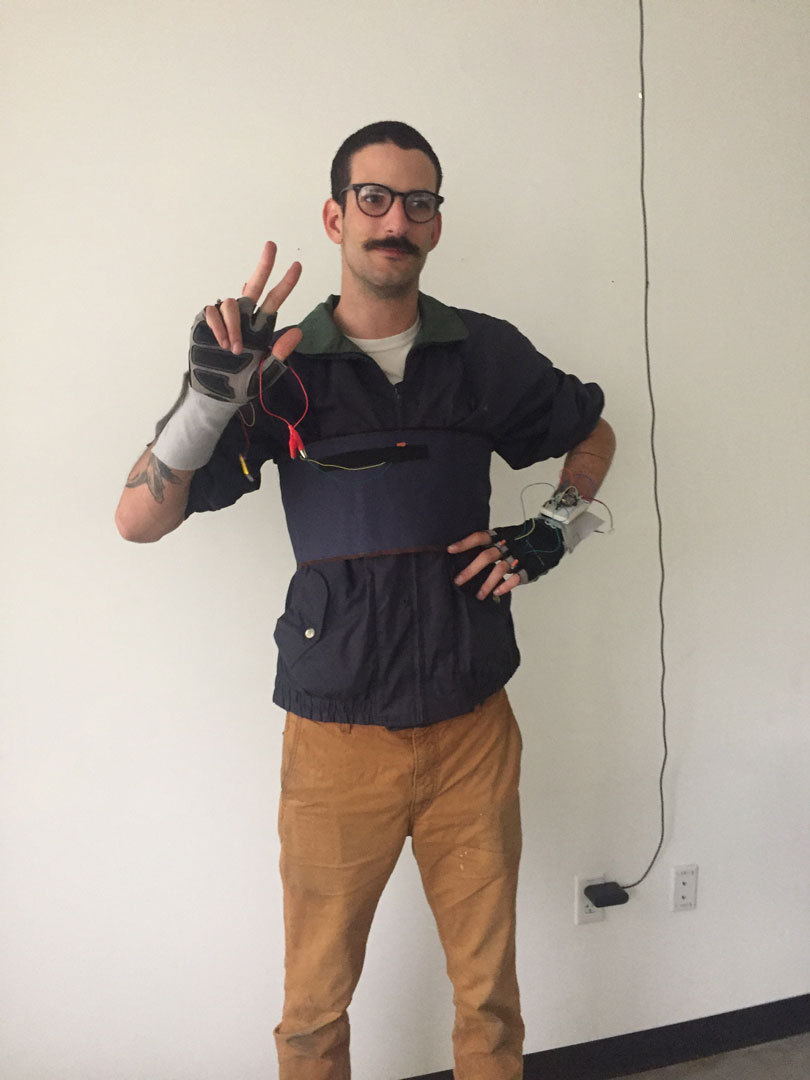
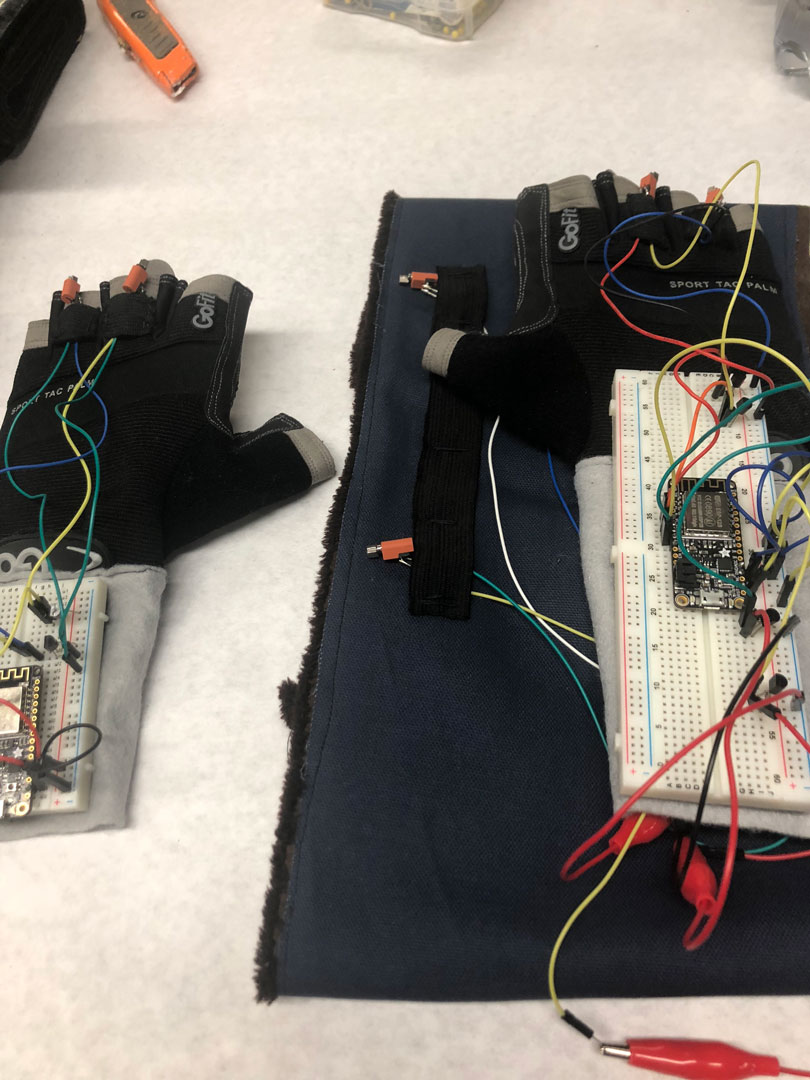
Hands and Chest

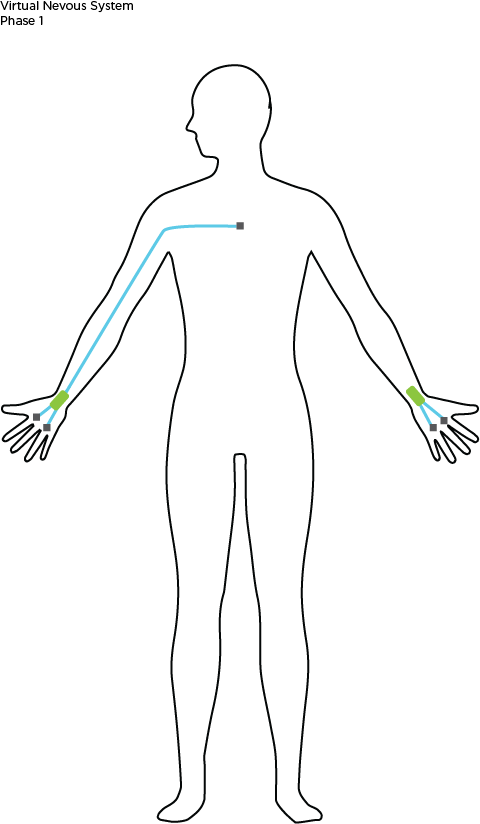
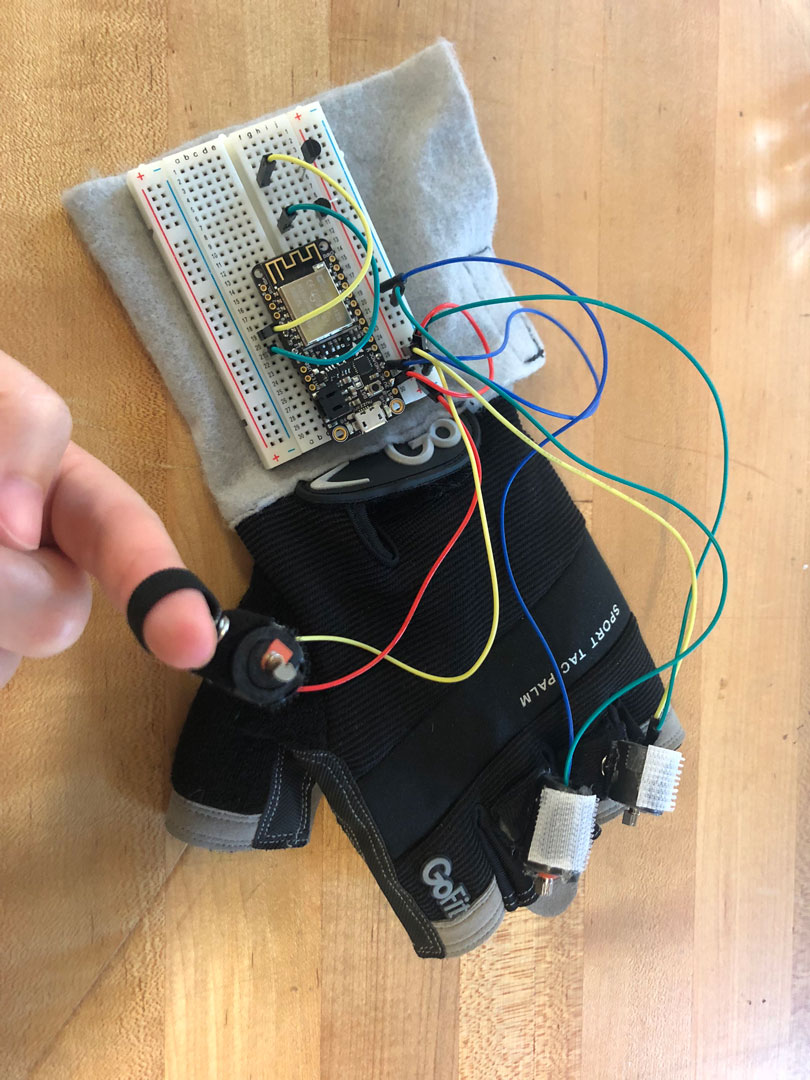
Our initial suit focused on the hands and chest. User feedback revealed it felt limiting — too localized to create genuine immersion. This pushed us to rethink both the physical design and the experience concept. We moved away from linear narrative toward something more spatial: a series of environments defined entirely by how they feel.
Second Build

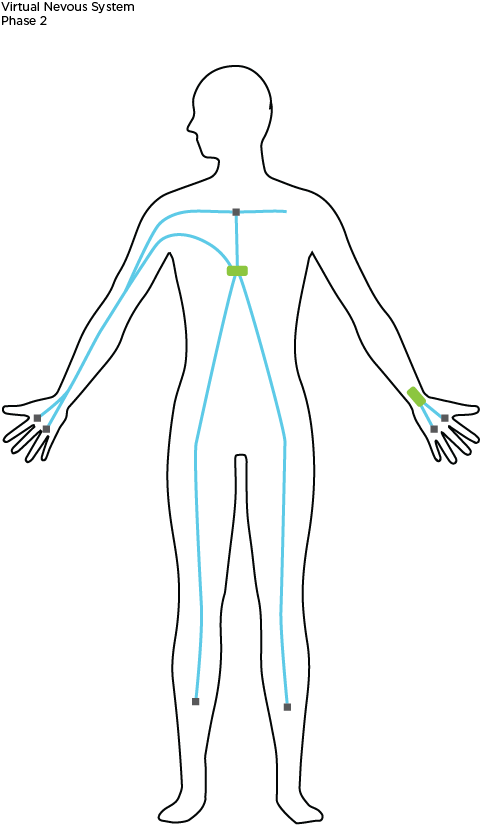
Full Body

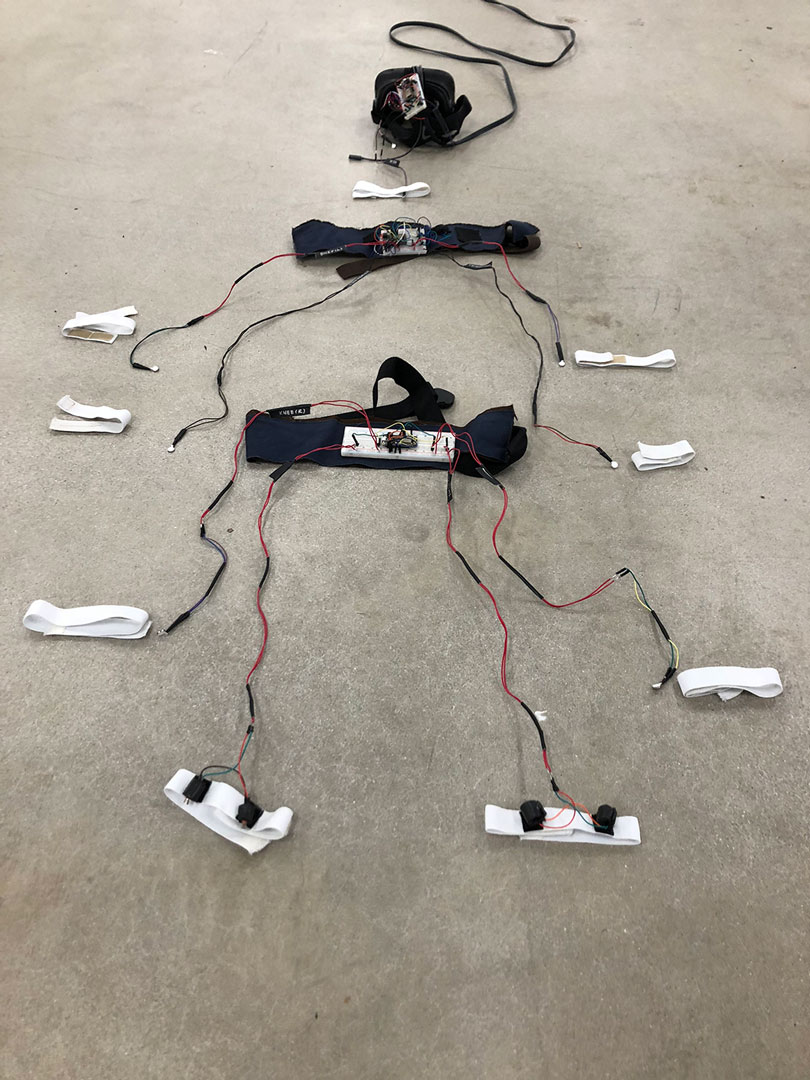
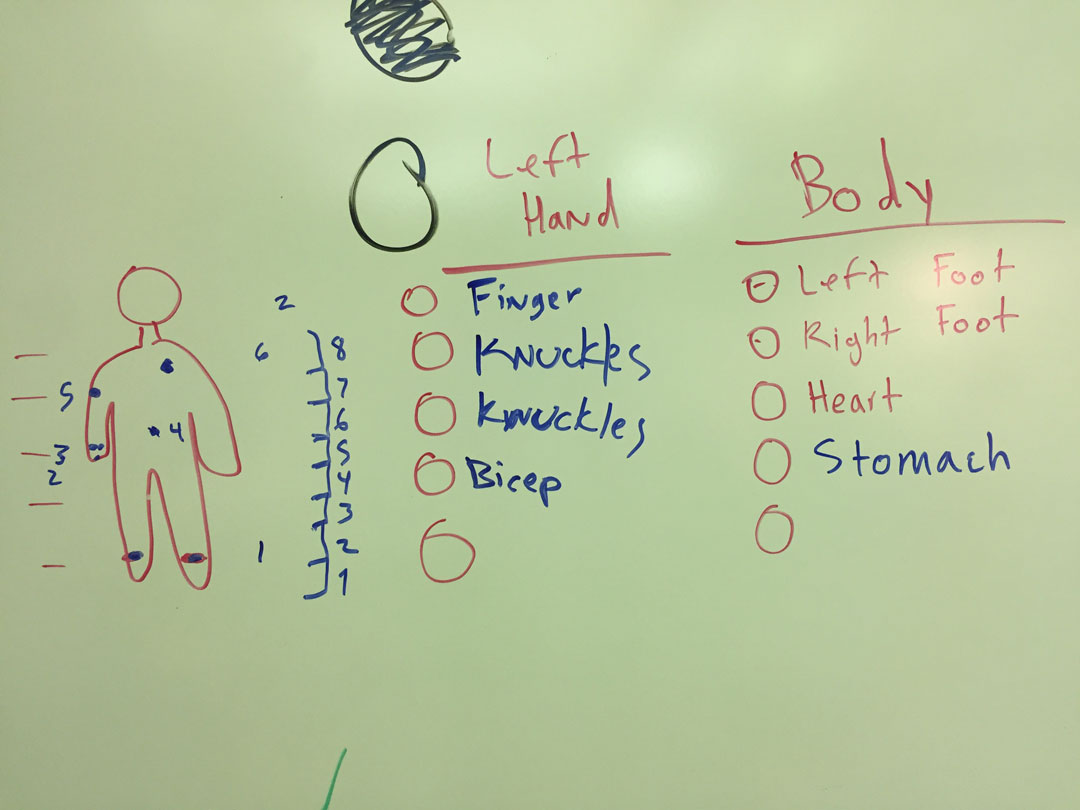
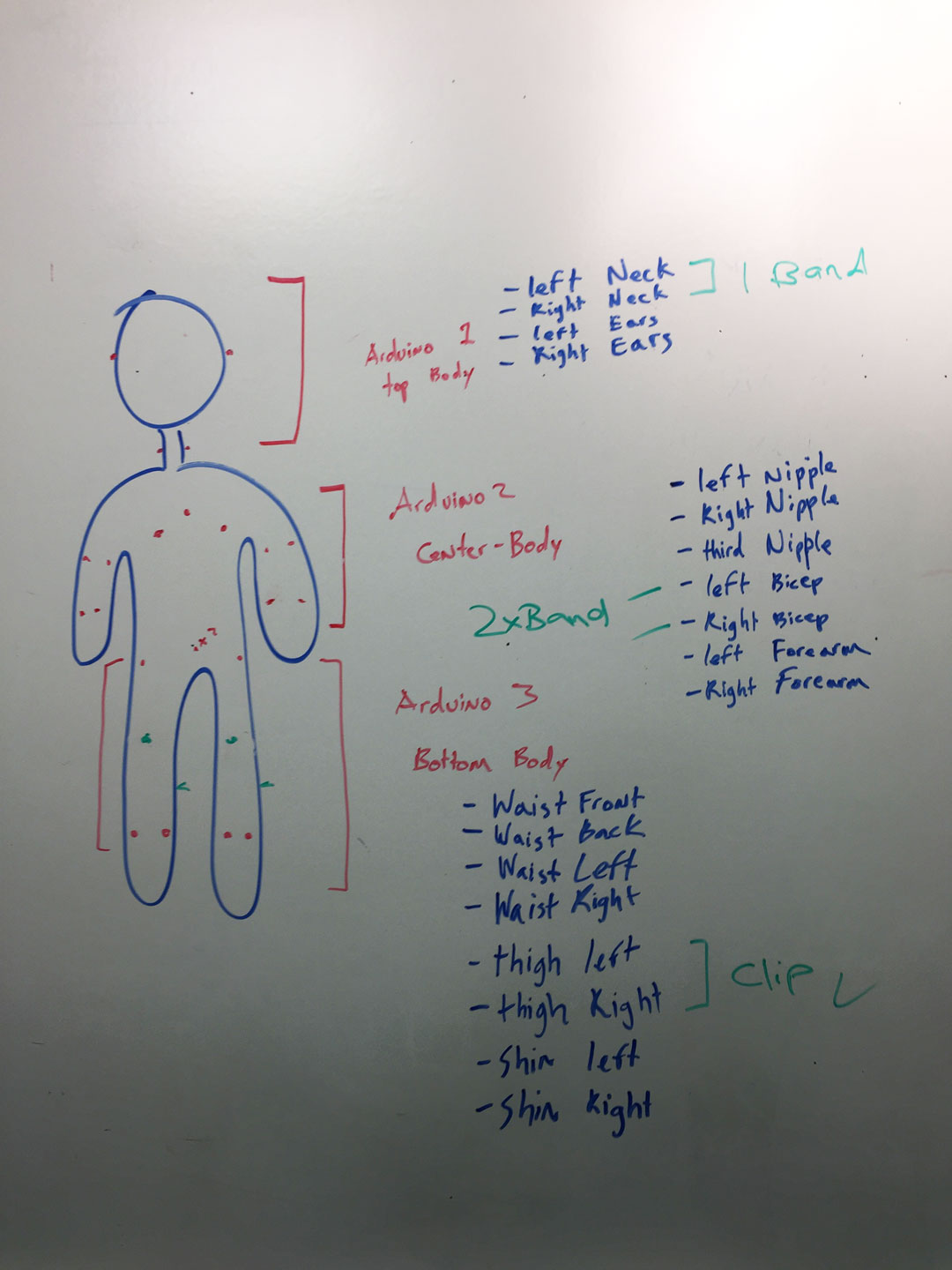
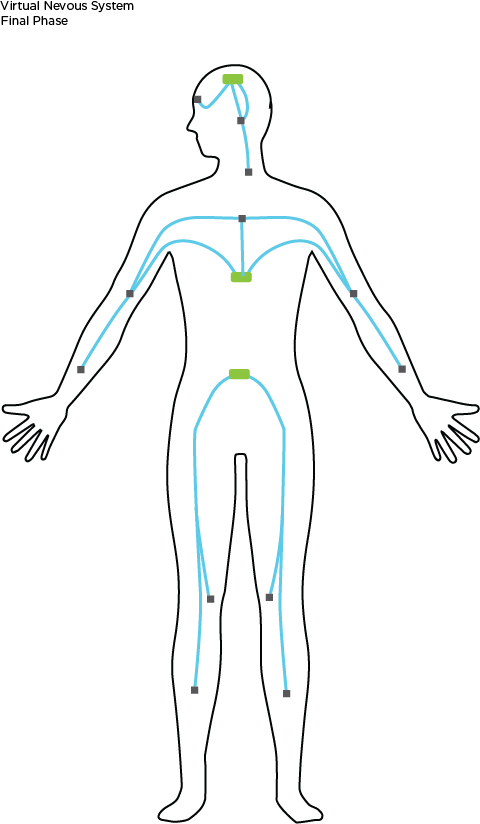
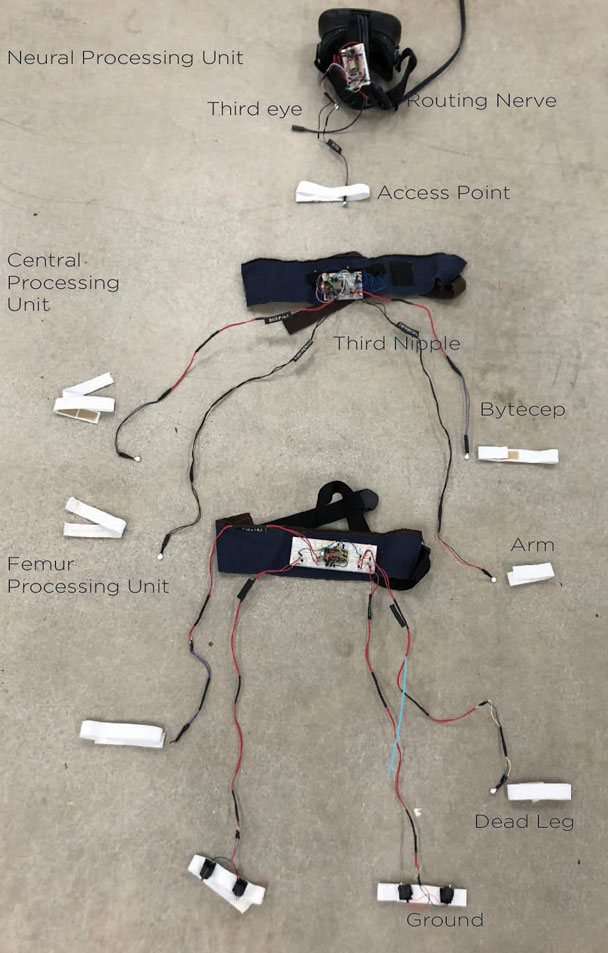
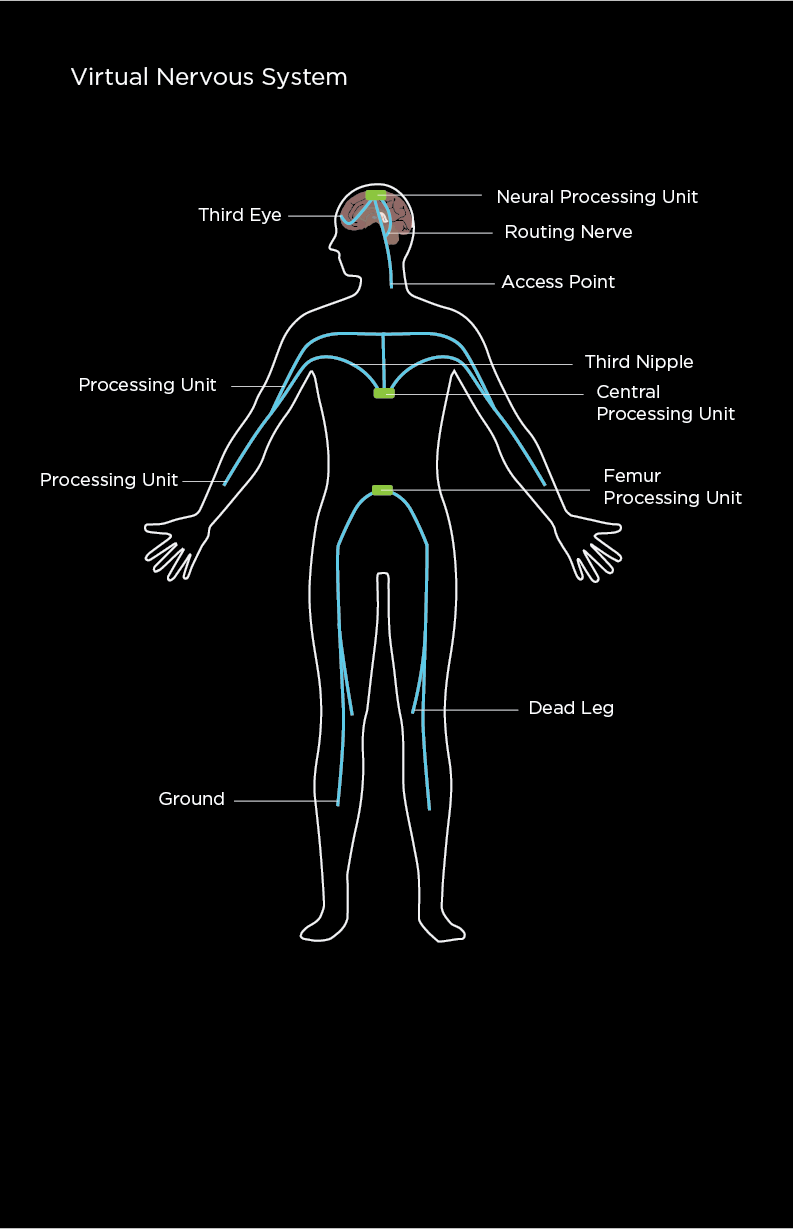
We added haptics at the shin, expanding toward a full body experience. User response was immediate and encouraging — people wanted more of their body involved, not less. We went back to the biological nervous system as a reference, mapping areas of the body with fewer nerve endings and weaker somatic associations — places where haptic sensation would feel novel rather than familiar.
Third Build

Usability Testing

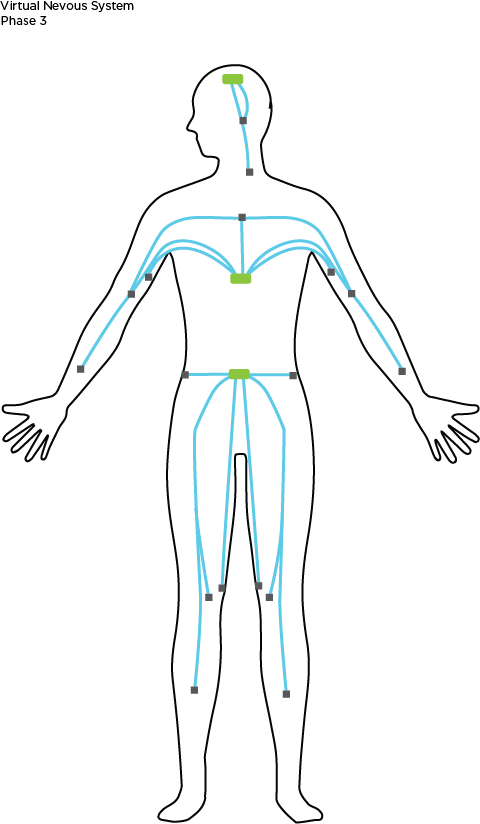
With a more complete suit we conducted structured usability testing. Two key findings emerged: we had over-indexed on haptic density, and several sensors were canceling each other out perceptually. More critically, users were still too aware of the motors on their body — the technology was breaking the illusion rather than sustaining it.
Final Refinement

Haptic Choreography

We stripped the suit back to only the necessary sensors and shifted focus entirely to feedback design — the rhythm, sequencing, and intensity of each haptic response. Drawing references from nature, animation, and physical performance, we prototyped and tested dozens of patterns before landing on the final choreography. The goal was sensation that felt inevitable rather than mechanical.